The revolutionary implementation of graphics and cartoons altered the publishing landscape, creating what we know it to be today. At its debut, the ability to convey emotion via simple images altered the political and cultural tide of the United States of America (USA). At their introduction, not all Americans may have had the literacy to fully comprehend the details of a published piece, but a simple photo or cartoon could spark intense emotion. The reach of graphic design continues to evolve, and now more than ever, Americans have the ability to both access and rapidly consume information, marketing, and opinions.
Design tools and media generation tool kits are easily discoverable tools by webusers, and the advancement of Artificial Intelligence content generation has dramatically increased accessibility. Combined with the rapid distribution of social media, many Americans now consume, generate, and distribute information via digital ephemera, more commonly known as “memes.” The use of images and short form content has dramatized the political, economic, and cultural landscape of the United States, and holds a mirror up to the citizen’s emotional states.
Infinitely Repeatable
Strategic use of design and typography principles stirs emotion in the audience. Memes are often the simplest of images, the ease of alteration and regeneration provides endless opportunities for shifts in intent and emotion. The famous use of the “Leave Britney Alone” meme is a famous example where the imagery and text formatting stayed the same through each iteration, but the alterations added by the users conveyed shifts in stance throughout the lifetime of the meme (Shifman, 2013).
What was intended to be an emotive plea on a video sharing site was clipped for distribution. Other users took and modified the image to turn it into a mocking stance. This became metalinguistic, where users ignored the intended plea, and utilized the imagery as a tool of mockery. Figure 1 demonstrates this evolution.
Figure 1
Comparison of original and user-adapted meme
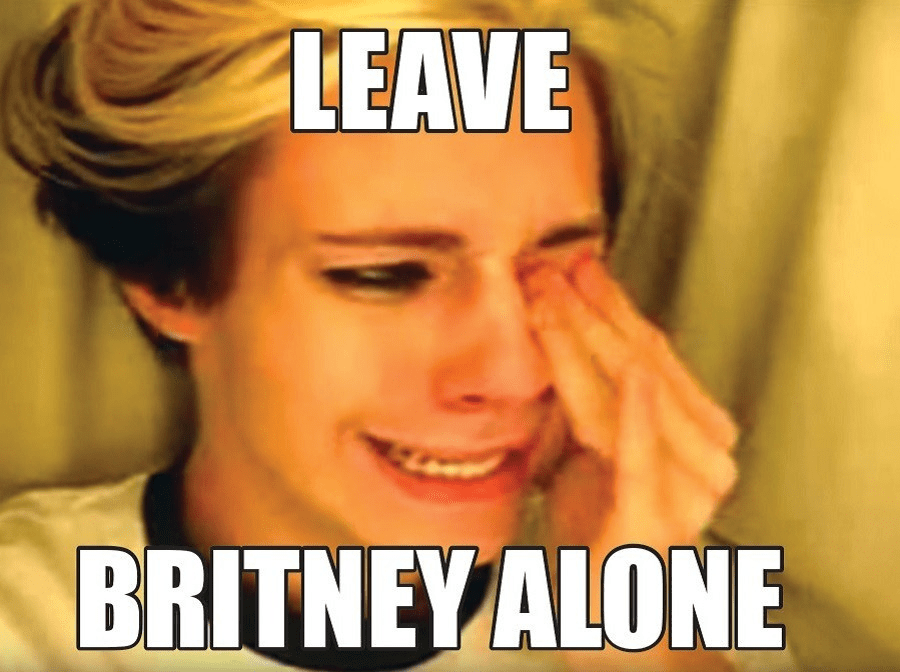
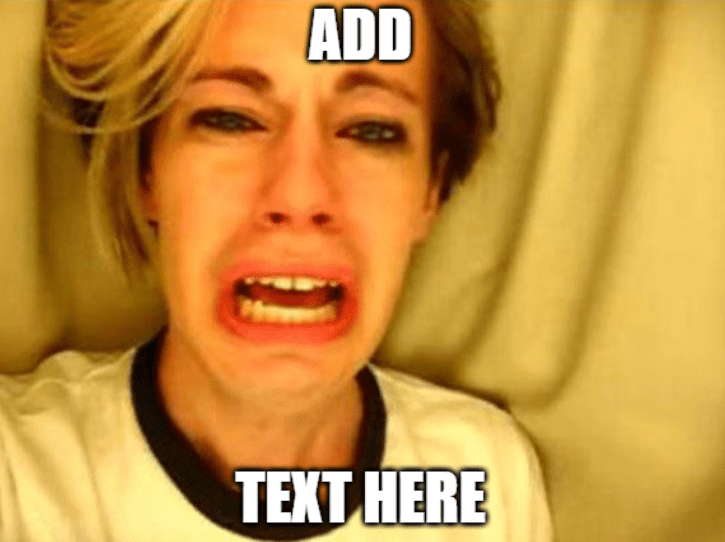
Note.The left panel shows the original meme format that was taken from a screen capture from the 2007 viral video by Chris Crocker. The right panel illustrates a user-generated adaptation remixing the content. From Leave Britney Alone (Complete), by @madringking1119, 2011 (https://www.youtube.com/watch?v=WqSTXuJeTks). From Leave Britney alone [Image], by imgflip, n.d. (https://imgflip.com/memegenerator)
As seen, the typography and base content of the image remain the same, while the tone becomes mocking. Online users creating new memes utilizing a template makes the new meme instantly recognizable for others. According to Norman and Ortony (2003), visceral responses are characterized by “an automatic evaluation of the perceptual properties of objects, and a quick classification of them as safe or dangerous” (p. 3). The blocky, impact type font assists in creating the visceral response in the user’s brain to tell them that this is not a serious image, despite the image’s subject being in distress. The impact type text meme was common when the use of memes became widespread, and subsequently the “user driven imitation and remix have become highly valued pillars of contemporary participatory culture” (Shifman, 2013, p. 365).
Memes can promote positive outcomes and present a call to action. A famous meme generated from an image of Vermont Senator Bernie Sanders practicing social distancing at the 2021 presidential inauguration is instantly recognizable to many. The non-profit Meals On Wheels transformed this meme into a marketing tool to raise funds. Figure 2 below depicts this imagery.
Figure 2
Meals on Wheels Advertisment
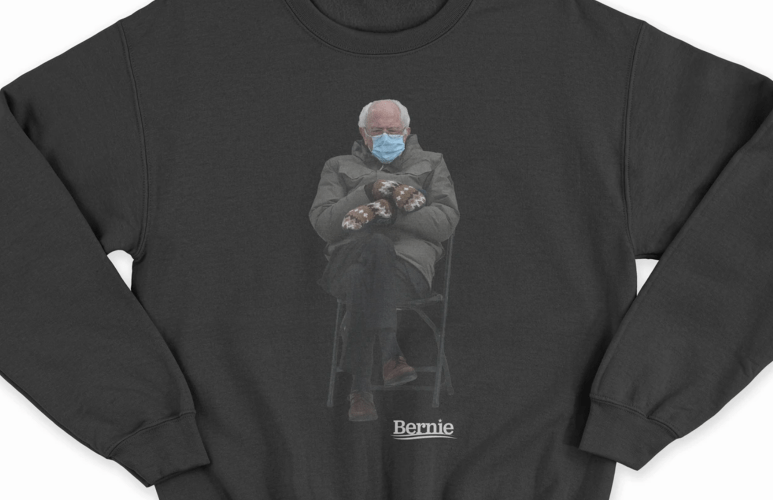
As Campbell (2018) notes, the Open Society statement emphasizes that “images have the power to highlight stories that aren’t gaining sufficient traction and to amplify a diversity of perspectives.” In effect, this image is a testament to that statement. Being laid on a piece of merchandise caught the eye of donors and shoppers, raising $1.8 million in merchandise sales for charitable organizations, including Meals On Wheels (Rathke, 2021).
The extent of usage for both mockery and good demonstrates a near infinite capacity for growth and application. The implementation of design principles furthers the impact to the viewer, and the easily accessible format invites access by all. Diving into more complex concepts of visual storytelling can further the understanding of this effective form of media.
Perception and You
Designers, marketing teams, and individuals utilize concepts of perception to convey ideas and control the audience’s attention. A perception concept is depth, which allows us to mentally construct three-dimensional space from visual signals using depth-cues (Spielman et al., 2020). The use of relative size relationships is common in American culture. A well known example is the “Distracted Boyfriend” meme, where a stock photo showing a man walking with his girlfriend looks back at another woman walking in the opposite direction. The image utilizes occlusion, where the man is overlapping his partner to show his attention shifting away. This practice is a common depth cue used to indicate depth in a static image (Northern Michigan University Art & Design Foundations, n.d.). The relative size and position of the characters also implies motion of the photo, as seen below in Figure 3.
Figure 3
Distracted Boyfriend Meme
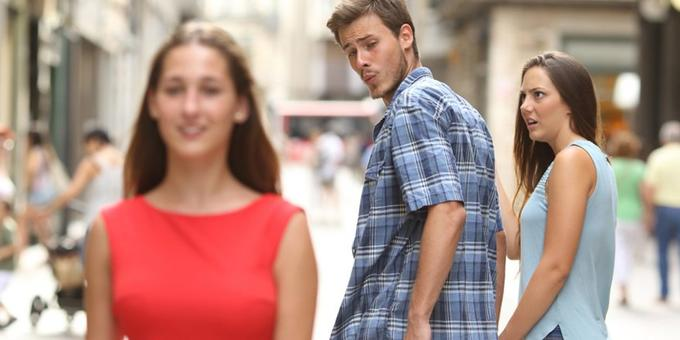
This meme was effective at grabbing users attention because it appealed to the sense of perception utilizing these core principles. In the context of influencing American culture, it continues to be remixed further, resulting in images such as Figure 4.
Figure 4
Distracted Boyfriend Meme – Politically Remixed
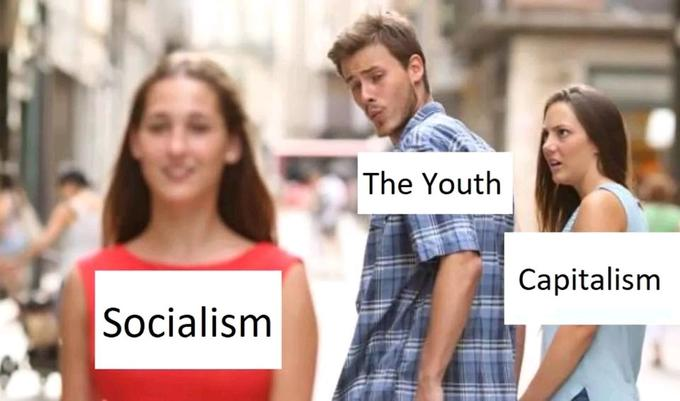
The intent of Figure 4 is to persuade and influence socio-economic preferences while evoking a humorous sense in the viewer. The image excels at doing so by appealing to the human sense of perception. The scenario is immediately relatable – if the viewer has not seen it themself, they’ve at least heard of such a situation. The relatability and real-life connection inspire a relationship between the viewer and the image, and by extension, the message written in the image.
Rapid recognition aids in rapid distribution, and recognition is formed from the human process of perception. A bizarre, and somewhat depressing example of perception in modern culture is through the use of Simplicity. In 2014, the creators of CTRL-ALT-DEL, an internet comic strip, published a hard departure from their usual comical take. The comic featured a husband discovering his wife had miscarried. Audiences were so appalled and shocked, that it was both rejected and mocked. The original comic strip, Loss, featured the subjects in various orientations, as seen in Figure 5 below.
Figure 5
The Original “Loss” Comic
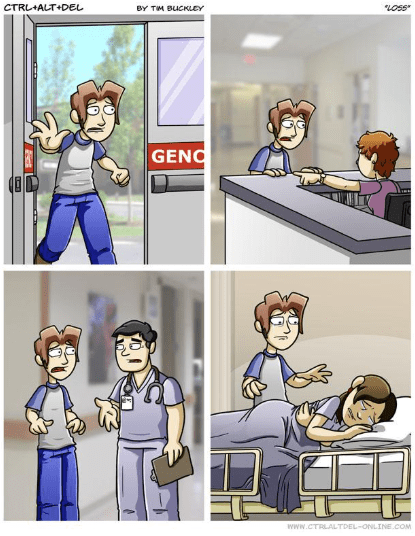
Despite being rejected, it was also incredibly distributed for this reason. The layout of the subjects in this image became so widely seen, the viewing audience began recognizing any fixture in such an orientation as an adaptation of the comic. Figure 6 below displays a compilation of all the different ways this comic strip has been remixed.
Figure 6
A compilation of “Loss” adaptations.
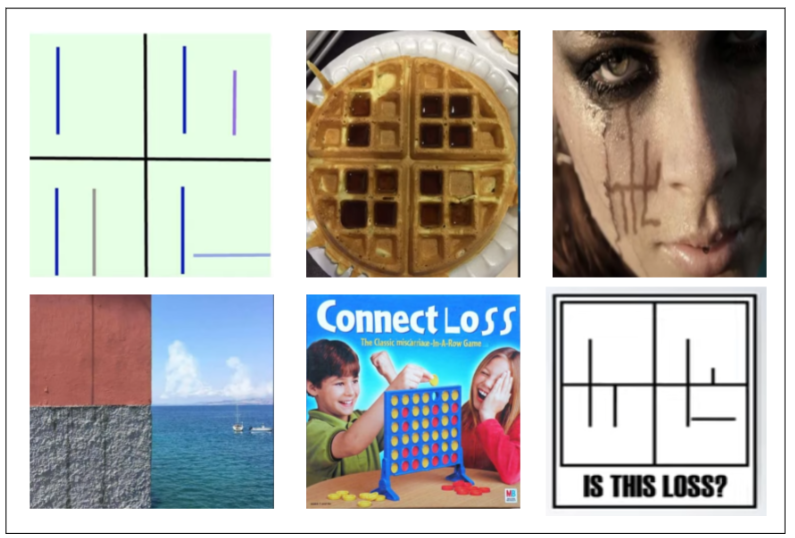
This morbid comic is not discussed here just for its abstract social phenomenon, it’s also an exemplary display of human perception. For viewers that are familiar with the comic, seeing just the following characters – (I II II I_) begets instant recognition, a pattern prioritizing structure over detail. The hospital, characters, or any other part of the setting becomes unimportant. The Gestalt Principles of Proximity, Similarity, and Closure shed light on how recognition is so potent.
Utilizing proximity, the placement of the two lines (II and II), represents two people, and represents the main character and the doctor / receptionist. The similarity of the lines suggests a pattern of continuation or normalcy, until the shock of the last scene where (I_) is shown, a departure from the (I and II) seen up until now. The abrupt shift creates a visual punchline, easily recognized upon repetition. Closure pulls it all together; the minimalist version (I II II I_) is not complete data. Alone, this string of characters should mean nothing to the viewer, but the brain is able to close the gaps.
In Mark J.P. Wolf’s Journal for Movies and Mind, the principle of closure in the creation of fictional worlds. It’s argued that “fictional worlds are necessarily and inevitably incomplete” which forces the audience to automatically “fill in the gaps” using logic and extrapolation. “Closure [is] the phenomenon of observing the parts but perceiving the whole.” (Wolf, 2012). The adaption of this theory in this specific scenario utilizes cultural memory to create the narrative arc in the audience’s mind. According to Busche (n.d.), the psychology behind the gestalt principles seeks to make sense of how our minds perceive things in whole forms, rather than their individual elements. This specific meme is one of the most prominent and widespread examples of the application of these principles, and a testament to their potency in grabbing attention.
Are You Influenced?
The widespread influence potential of these early images emerging as memes discussed earlier to the more-recent social phenomena like the undying comic strip undergoing constant renaissance is almost unlimited. Less than 5 minutes of social media usage would likely bring at least one meme to the viewers attention, with accounts generating more content everyday. It’s clear that these images are highly popular, recognizable, and have high potential for distribution .Combined with the accessibility of the average American to meme-creation tools, any individual now has the capability to go “viral” (i.e. reach a large population).
Context matters here. Going “viral” is a goal by many content creators, to have their work seen by millions. Viral videos often inspire deep emotion, be it laughter, upset, or joy. “Virality is partially driven by physiological arousal. Content that evokes high-arousal positive (awe) or negative (anger or anxiety) emotions is more viral. Content that evokes low-arousal, or deactivating, emotions (e.g., sadness) is less viral.” (Berger & Milkman, 2012, p. 192). Berger and Milkman argue that to reach the desired level of popularity, strong emotion needs to be invoked. Let’s combine that goal with another principal of modern social media: Simplicity and Humor. Shifman (2014) argues that the simplicity of a meme is crucial for its survival, noting “when people understand something quickly and intuitively they are happy to forward it to others” because they “wish to amuse their friends and be associated with wittiness” (p. 354). This is the “wildfire” idea behind memes: simple, humorous (relatable), emotion driven, and infinitely distributable at will.
The tools of current social media platforms encourage the rapid distribution of memes and other contents. With a tap of an arrow icon, an image can be sent to one, ten, or 100 friends, similar to a logarithmic growth model. As Shifman described, people want to amuse their friends. Furthering this principle into the state of American Culture, A collective amusement could represent the desires of a population, and the content shared holds a mirror to their thoughts.
Wildfire Potential
Images, videos, and multipanel comics are circulated rapidly in modern social media and digital interactions. It’s not uncommon for friends to solely interact through sending content, much of it familiar to both senders. Taking advantage of these existing media formats is prime real estate for parties looking to spread a political message. Most recently, opposing political campaigns implemented widely available meme templates into spreading political imagery and ideology.
Dark Brandon, a simple meme involving the 46th President of the USA, was originally designed by Supporters of the challenging Donald Trump, but was then co-opted by the pro-Biden marketing campaign. Figure 7 depicts this meme, where President Biden is shown to have glowing red eyes.
Figure 7
Dark Brandon Meme
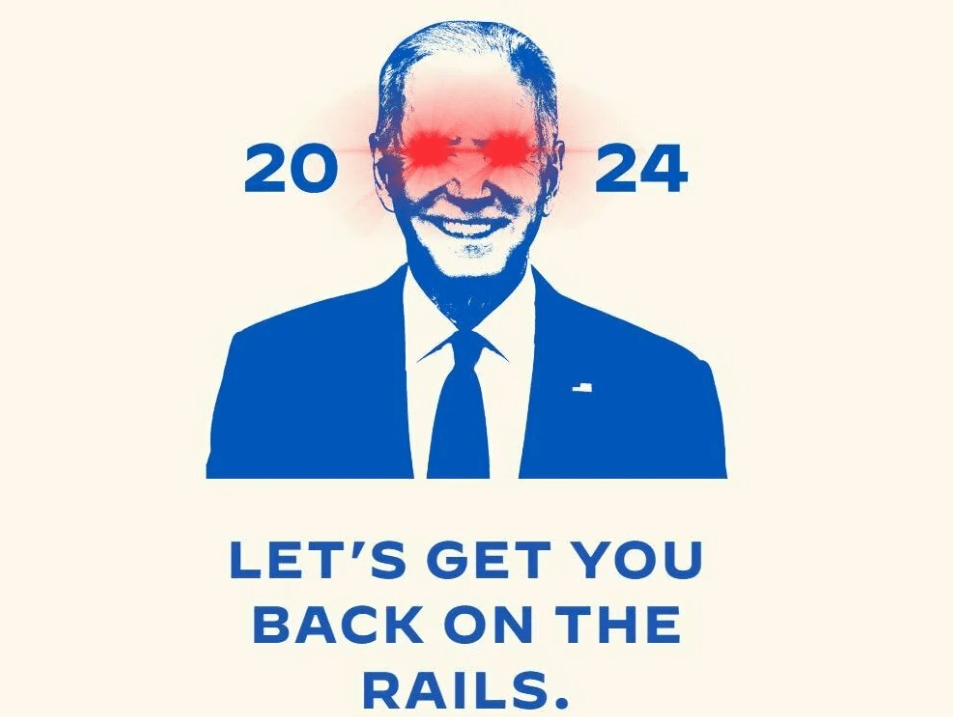
An article by Gustaf Kilander (2023) reports on the first use of the Biden campaign’s marketing strategy, using a well known meme adding red eyes to a subject to show power. The fundraising team had historically limited success with the small-donor contributions. Figure 8 shows the 46th President holding a coffee mug with this simulacrum.
Figure 8
Dark Brandon Meme – Biden Harris Campaign Simulacrum
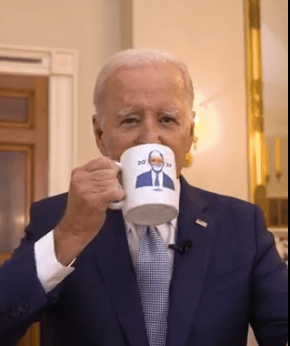
Implementing this meme as a marketing campaign was a direct attempt to tap into the use of memes and engage with online audiences. The red-eyes meme indicates powering up, often before conquering an opposing foe. This trope originated in the TV shows and movies, but held widespread popularity in Dragon Ball Z, a Japanese Cartoon beloved by many children of the 90’s, and a mobilized voting population today. Simplicity and the closure Gestalt principles are at play here. The creators / designers simply took a photo of the president and added red-eyes. The viewer’s brain associates the simple red eyes to a nostalgic sense of a “power-up,” and the effect of closure brings that fantasy world generated by the user into a recognized narrative without any further information either. The audience’s brain creates the brackets and provides the context from the nostalgia cue that the image provides.
Rage Baiting
Rage baiting is both a word and a phenomenon, and is a product of attention economy. Rage Baiting is “online content deliberately designed to elicit anger,” which is “typically posted in order to increase traffic to or engagement with a particular web page or social media account.” (Dimri, 2025). Using memes, online users have been rage baiting politicians to incite reactions, and often it works.
In 2025, one of the memes that almost broke the internet was various simulacrums of JD Vance (Placido, 2025). The meme format has been subject to attention for many months of 2025, and so many different edits have been made. From mentions of Kim Kardashian, making Vance more attractive, or more puffy-faced, as a child with a lollipop and propeller hat, with long, curly hair and too-wide eyes, and many more, see Figures 9 and 10 for an inexplicable renditions.
Figure 9
An outrageous meme edit of Vice PresidentJD Vance
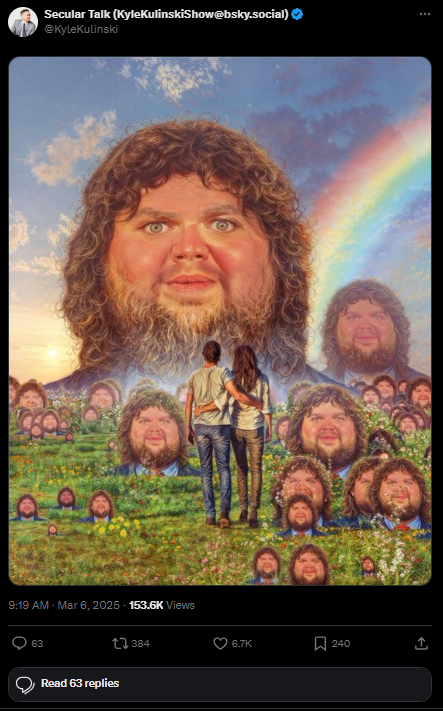
Figure 10
A compilation of JD Vance meme edits
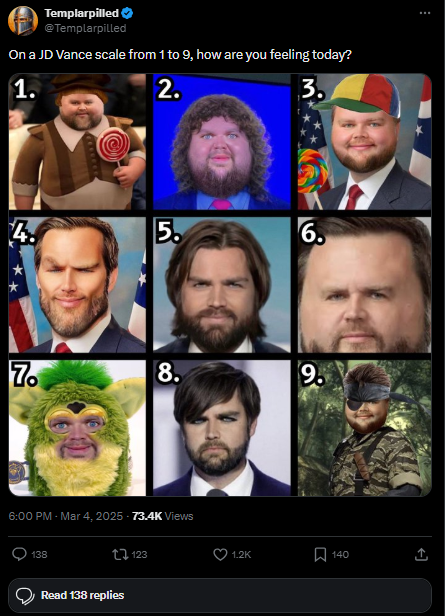
Meme makers have been consistently raising the bar, creating more hideous and outrageous edits, and even referencing older memes. The spark gained traction because of online attention, but also because of US Citizen outrage at the 50th Vice President with his political actions throughout the year. Many of these Vance memes have become viral, hitting the screens of thousands of people, whether their US Citizens or not.
In response to the different circulating memes, the 50th Vice President chose to dress as himself for Halloween, as shown in Figure 10. The popular meme that was circulating includes edits of Vance’s bulged eyes, puffed cheeks and a pinched version of his face, and long, brown curly hair on his head.
Figure 11
Vice President JD Vance dresses as himself for Halloween
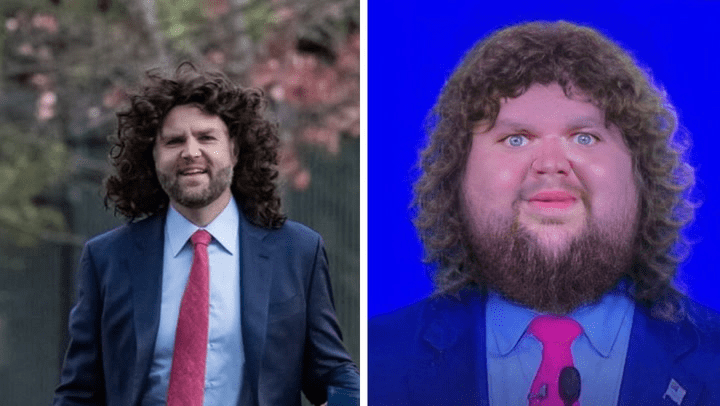
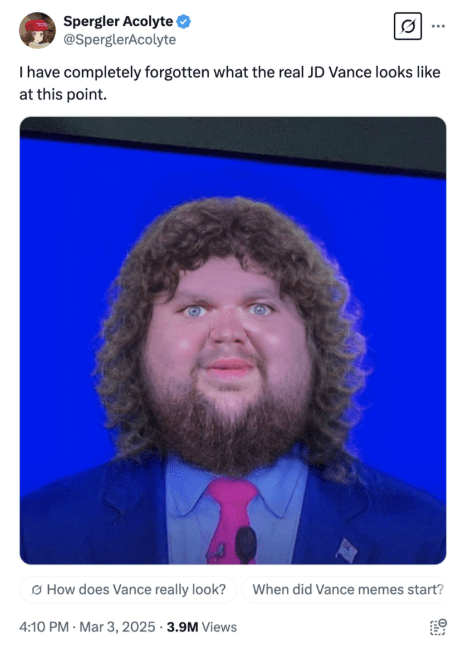
Other iterations would be impossible for Vance to imitate in-person because of the outrageous editing. The meme “[has been inflated, stretched, smoothed and contorted so many times on social media that it’s easy for hyper-online politicos to forget what JD Vance actually looks like — and even easier for casual internet users to stumble upon a baffling depiction of the former senator from Ohio (Paúl, 2025). Figure 11 shows a screenshot of an X post from user @SperglerAcolyte commenting that they have no idea what the Vice President looks like anymore.
Figure 12
An online user commenting on a meme iteration of JD Vance
Rage baiting persists in online culture because it thrives on the feedback loop. Emotion sparks engagement, engagement fuels visibility, and visibility amplifies the ensuing chaos. The JD Vance meme cycle shows how quickly political figures become subject to online discourse and symbolic material. Thousands of people have reshaped this meme, often coming from a place of displeasure with Vance’s political actions. Rage baiting is not only a tactic of attention economy, but it has become a modern model of political expressions – like political cartoons were and still are.
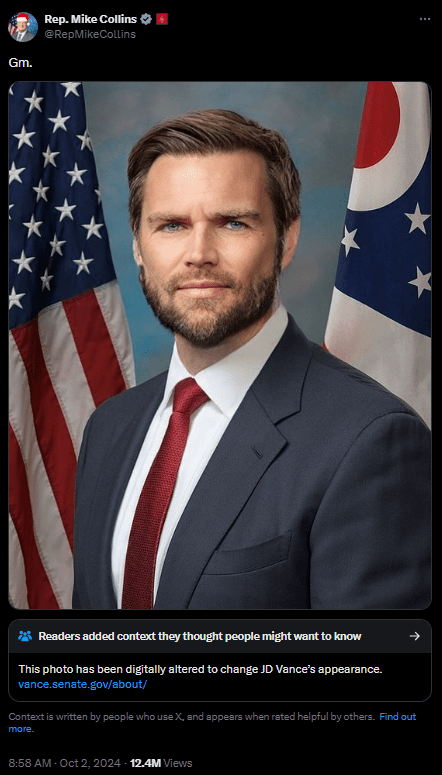
The JD Vance meme cycle was started by intense displeasure with his actions, but both sides of the political aisle have participated. “The MAGA right sees Vance as becoming torchbearer of the movement. The left sees him as a potential shill for whatever he needs to do to make himself more politically usable. And that’s how you get all these different remixes” (Cohen, Kilander, 2025). In Figures 9-12, Vance is depicted as overstuffed and horrifying, but the right leaning meme generators have chiseled him into handsome renditions. Figure 13 shows US House Representative Mike Collins (R-Georgia) post of a heavily edited rendition of Vance’s official portrait, sharp jawline and slim cheeked.
Figure 13
X (Formerly Twitter) post by Rep. Mike Collins (R-Georgia)
The use of meme generators has aided in the production of memes for years, but new technology like Facetune and AI make it easier for online users to create them. All photographs are now fair game for editing and reproduction, not just for Adobe Photoshop experts. Early meme culture relied on simple images, panels and block text to get the point across. With the new generation of technology and increase of online presence of young generations, this has evolved to include video, video editing, sound and music. Renditions of memes have been altered past the point of recognition, like the minimalist rendition of Loss. If someone isn’t familiar with the first couple, then the meaning is lost entirely. With editing photos of people, or completely generating new faces with AI, the point of entry is brand new and can be adopted for anyone’s understanding.
This shift has expanded the creative field. A photograph posted anywhere online can be downloaded, altered, and re-released into the feed, spawning new variations as it spreads. The increase of accessible editing tools means that political figures, celebrities, and everyday users alike can become the subjects of mass reinterpretation, often without their consent and at a pace that makes moderation nearly impossible. Meme culture now operates less like traditional graphic design and more like a constant, rapidly evolving dialect.
The Big Picture
The ability to rapidly disperse content through peer-to-peer, social groups, or even political advertising campaigns utilizing memes creates a strong pathway to recognizable branding in a timeless era. Furthermore, with the widespread accessibility of content creation in 2025 it’s easier now to self express than ever. With memes being a centerpoint of modern social media, communication of individuality, brand identity, political message, and socioeconomic thought can be broadcast loudly with lasting effect simply by utilizing these images.
Memes are effective because they draw attention, both inspire and play to the process of perception, and are endlessly recognizable. The remix of these images allowing all users to create an identity is a partial display of the fabric of America, and is a mirror to the current culture of the USA.
Download the Whitepaper Here
References
Berger, J., & Milkman, K. L. (2012). What makes online content viral? Journal of Marketing Research, 49(2), 192–205. https://doi.org/10.1509/jmr.10.0353
Buckley, T. (2008, June 2). Loss [Webcomic]. Ctrl+Alt+Del. https://cad-comic.com/comic/loss/
Busche, L. (n.d.). Simplicity, symmetry and more: Gestalt theory and the design principles it gave birth to. Canva. https://www.canva.com/learn/gestalt-theory/. (Module 4)
Buckley, T. (2008). Loss. Ctrl+Alt+Del Comic. https://cad-comic.com/comic/loss/
Caldwell, D. (2019, February 5). Distracted Boyfriend. Know Your Meme. https://knowyourmeme.com/memes/distracted-boyfriend
Campbell, D. (2018, January 22). Why it’s time for visual journalism to include a solutions focus. Witness. https://witness.worldpressphoto.org/why-it-is-time-for-visual-journalism-to-include-a-solutions-focus-5be15aec3afc. (Module 5)
Chorley, C. (2025, November 2). JD Vance dresses as his own internet meme for Halloween. Independent TV; The Independent. https://www.independent.co.uk/tv/news/jd-vance-halloween-meme-video-b2856998.html
Dimri, A. (2025, December 6). Rage Bait Is a Brilliant Word of the Year. The Atlantic. https://www.theatlantic.com/ideas/2025/12/rage-bait-2025-oxford-word-internet-language-defense/685143/
Guillem, A. (2015, November 1). Disloyal man with his girlfriend looking at another girl stock photo. IStock. https://www.istockphoto.com/photo/disloyal-man-with-his-girlfriend-looking-at-another-girl-gm493656728-77018851
Imgflip. (n.d.). Meme Generator – Imgflip. Imgflip.com. https://imgflip.com/memegenerator. This site is used to help online users make new memes based on past meme graphics using a template format.
JDVance. (2025). Untitled. In X (formerly Twitter). https://x.com/JDVance/status/1984370346204524803. This is an image of JD Vance that was posted on Halloween. Vance is dressed like one of the memes of himself.
Kilander, G. (2023, August 4). Biden campaign embraces “Dark Brandon” meme with new merch. The Independent. https://www.independent.co.uk/news/world/americas/us-politics/joe-biden-2024-campaign-dark-brandon-b2387832.html
Kilander, G. (2023, August 4). Biden campaign embraces ‘Dark Brandon’ meme with new merch. The Independent. https://ca.sports.yahoo.com/news/biden-campaign-embraces-dark-brandon-174017403.html
Kilander, G. (2025, March 7). What Vance thinks about all those memes with his distorted face. The Independent. https://www.the-independent.com/news/world/americas/us-politics/jd-vance-memes-zelensky-pictures-b2711131.html
Know Your Meme. (n.d.). Distracted boyfriend. Retrieved December 4, 2025, from https://knowyourmeme.com/memes/distracted-boyfriend
Know Your Meme. (2024, June 10). Is This Loss? The Sad Comic That Turned Into A Historic Meme. YouTube. https://www.youtube.com/watch?v=k29cdkrZCN4
KyleKulinski. (2025). Untitled. X (Formerly Twitter). https://x.com/KyleKulinski/status/1897653174963474494. This image shows an outrageous edit of JD Vance with long hair, bulging eyes in the sky surounded by miniature versions of himself.
Levey, R. H. (2021, January 26). Sanders Camp Turns Meme into Meals (on Wheels). TheNonProfitTimes. https://thenonprofittimes.com/news/sanders-camp-turns-meme-into-meals-on-wheels/
madringking1119. (2011, August 11). Leave Britney Alone (Complete). YouTube. https://www.youtube.com/watch?v=WqSTXuJeTks
Norman, D. A., & Ortony, A. (2003, November). Designers and users: Two perspectives on emotion and design. Paper presented at the Symposium on Foundations of Interaction Design, Interaction Design Institute, Ivrea, Italy. https://projectsfinal.interactionivrea.org/2004-2005/SYMPOSIUM%202005/communication%20material/DESIGNERS%20AND%20USERS_Norman.pdf (Modules 2 & 3)
Northern Michigan University Art & Design Foundations. (n.d.). Depth cues. Retrieved December 4, 2025. http://artnet.nmu.edu/foundations/doku.php?id=depth_cues. (Module 4)
Paúl, M. L. (2025, March 7). Why JD Vance’s face is the meme of the moment for both right and left. The Washington Post. https://www.washingtonpost.com/style/2025/03/07/jd-vance-face-meme/
Placido, D. D. (2025, March 8). How “JD Vance Edit” Memes Broke The Internet. Forbes. https://www.forbes.com/sites/danidiplacido/2025/03/08/how-jd-vance-edit-memes-broke-the-internet/
@RepMikeCollins, US Rep. Mike Collins (R-Georgia). (2025). Gm. X (Formerly Twitter). https://x.com/RepMikeCollins/status/1841462716348678274
Rathke, L. (2021, January 27). Bernie Sanders’ mittens, memes help raise $1.8M for charity. AP News. https://apnews.com/article/bernie-sanders-mittens-memes-charity-3f8afd8e8a5a0b8b9709dd6d4d30ec13
Romo, V. (2023, April 25). “Dark Brandon” meme makes an appearance on Biden’s new campaign website. NPR. https://www.npr.org/2023/04/25/1171885259/dark-brandon-meme-makes-an-appearance-on-bidens-new-campaign-website
Shifman, L. (2013). Memes in a digital world: Reconciling with a conceptual troublemaker. Journal of Computer-Mediated Communication, 18(3), 362–377. https://doi.org/10.1111/jcc4.12013
Shifman, L. (2014). The cultural logic of photo-based meme genres. Journal of Visual Culture, 13(3), 340–358. https://doi.org/10.1177/1470412914546577
@SperglerAcolyte. (2025). I have completely forgotten what the read JD Vance looks like at this point. X (Formerly Twitter). https://knowyourmeme.com/memes/jd-vance-edited-face-photoshops. The original post was taken down by the user. However, the screen capture of the post is on the provided website.
Spielman, R. M., Dumper, K., Jenkins, W., Lacombe, A., Lovett, M., & Perlmutter, M. (2020). Psychology 2e. OpenStax. https://openstax.org/books/psychology-2e/pages/5-3-vision
Templarpilled. (2025, March 4). On a JD Vance scale from 1 to 9, how are you feeling today? X (Formerly Twitter). https://x.com/Templarpilled/status/1897059488081043710. Compilation of JD Vance memes.
Wikipedia Contributors. (2019, January 23). Simulacrum. Wikipedia; Wikimedia Foundation. https://en.wikipedia.org/wiki/Simulacrum
Wikipedia Contributors. (2024, April 7). Metalinguistics. Wikipedia; Wikimedia Foundation. https://en.wikipedia.org/wiki/Metalinguistics
Wolf, M. J. P. (2012). World Gestalten: Ellipsis, logic, and extrapolation in imaginary worlds. Projections, 6(1), 123–141. https://doi.org/10.3167/proj.2012.060105
 Isabella Susino
Leave a comment