

What kind of sites do you visit frequently? What features do they have that you enjoy? Have you ever thought about what goes into designing and creating a website? A lot more work goes into them than you might initially think.
Website designers need to keep a couple of things in mind when creating websites. Like how the end-user will utilize the site, what brought them to the site, what can keep them returning.
Cognitive psychology is the study of how the human mind works, including the mental activities that take place in the brain and the different factors that influence human perception.
Nick Babich, Adobe Xd Ideas, 2020
There are a few principles within Cognitive Psychology that are valuable for Information Architecture:
- Gestalt principles
- How users perceive objects in relation to each other. Similarity, continuity, proximity, symmetry, and closure are all aspects of this, and all of these can influence how designers organize graphical information on the screen.
- Designers will often think of the individual parts of the working site, but the users are getting things all at once. It’s a totally different experience for them.
- Mental Models
- Preconceived notions that users have about something before experiencing it. When IA designers take this into account, users will find things in places they were expecting them to be.
- Cognitive Load
- The amount of brain power that a user has to give in order to accomplish their task. It is also the amount of information that the user can receive at any given moment. The more simplistic design of a site, the better for the user and the more memorable it will be for them.
Now that we’ve gone over the background information on Information Architecture, it’s time to dive into the topic.
What is Information Architecture?
Informtion Architecture (IA) focuses on the organization of information within the design of a website. There is a balance between organization, flow, and function, and IA assists in finding that balance.
Think of IA as the backstage, a show cannot function without those critical pieces. The lights don’t turn on, the curtain doesn’t rise or fall, backgrounds don’t change. But, it’s not something that the audience sees from their seats.
Another example of IA is the blueprint of a building. The architect needs to put specific details about rooms, walkways, windows, etc. Now think of the blueprint as the website as a whole, the rooms are different landing pages, walkways are the navigation menus, and windows are previews you see of content.
Why is it useful?
Information Architecture design allows users to focus on their goal and tasks while on the website, rather than losing focus while trying to navigate the site. Users go to website for the content that is on them. Creating content that users are interested in is key to a valuable site. However, the flow of the website is really what matters. If users cannot find the content they are looking for, they will leave the site (abandonment).
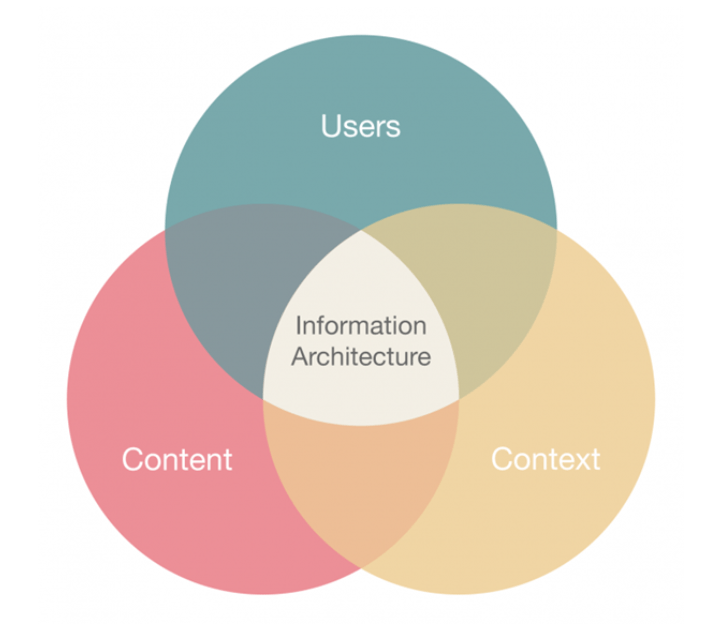
Context is another crucial piece of the IA puzzle. Who, what, where, when, how and why the user is seeking out the website. Designers need to figure out the user’s goal, needs, behaviors, and expectations.
Site Mapping
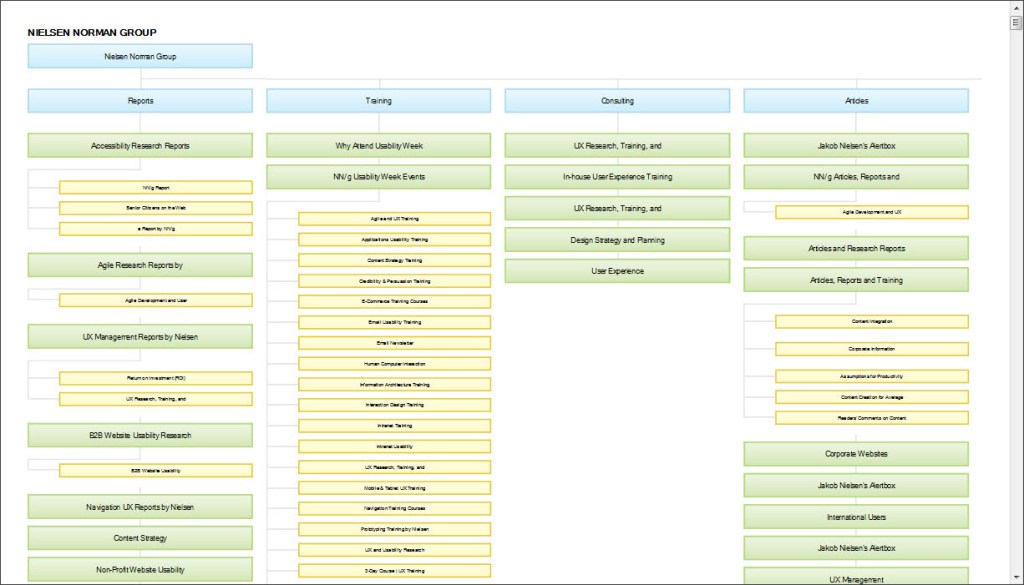
Site mapping is the backbone for the functionality of the website, it shows how the website is meant to flow and what information can be found where.
Think about the blueprint example again – this is where this comes into play in IA. In the site map below, think of each blue box as a room. The green boxes are activities you can do in that room, and the yellow boxes are the different aspects of each activity you can do.
Walking For Rochester
Walking For Rochester is a 501(c)3 non-profit organization in Rochester, NY. What exactly do they do for the community? They host weekly Community Cleanups, plan private Corporate Cleanups for businesses/teams, offer a Volunteer Program to record service hours, and have a Litter Removal Service.
WFR Site Maps
Information Architecture is a valuable skill to those working on websites, but also for those who are making digital content. There are principles that can be applied to any area of content creation, whether it be a blog, a website, a portfolio, a resume, a .pdf document, or anything else that has an audience. Having transferrable skills sets you apart from your competition and will further your skillset in other areas.
Resources
https://www.nngroup.com/articles/ia-vs-navigation
 Isabella Susino
Leave a comment