
UX method/technique:
Semantic Differential Analysis (SD) was developed in 1957 by Charles E. Osgood, a social psychologist, who studied the mental aspects of speech and language. In his research, it was discovered that certain words and phrases have either positive or negative connotations. Source.
Basically, this UX method asks respondents to choose a point on a scale that best reflects their opinion. The one listed below is a popular format for these quentionnaires. The question posed is meant to be open ended and the answer is completely up to the respondant.

How is the method used?
“A type of semantic rating scale measuring the connotative meaning of concepts like terms, objects, events, activities, ideas, etc. It captures the affective and cognitive components of respondents’ attributions to selected concepts on a multidimensional level.”
“Different from other rating scales, the SD is universally applicable – it measures associations, motivations, emotions, attitudes, etc., for almost every concept.”
“The major purpose of the SD is to understand the connotative meaning of concepts, by measuring the connotative similarities, and differences within and between respondents’ ratings.”
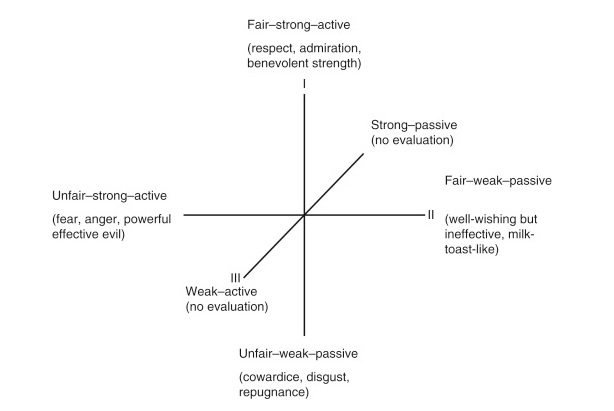
Research studies
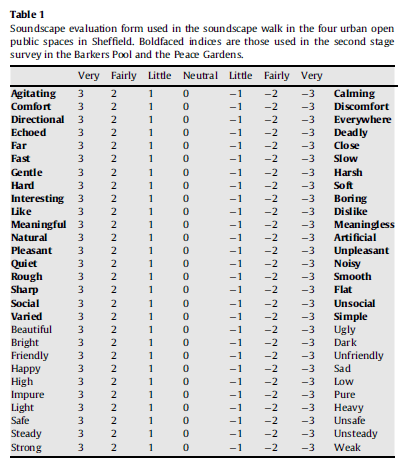
- Semantic differenetial analysis of the soundscape in urban open spaces
- This study had respondants listen to a sound scape captured in an urban environment. The below table shows how the repondants feel about the sounds that were captured.
- I wish that the study inlcuded the sounds. If they did, I could get into the minds of the respondants and try to see why they responded how they did.
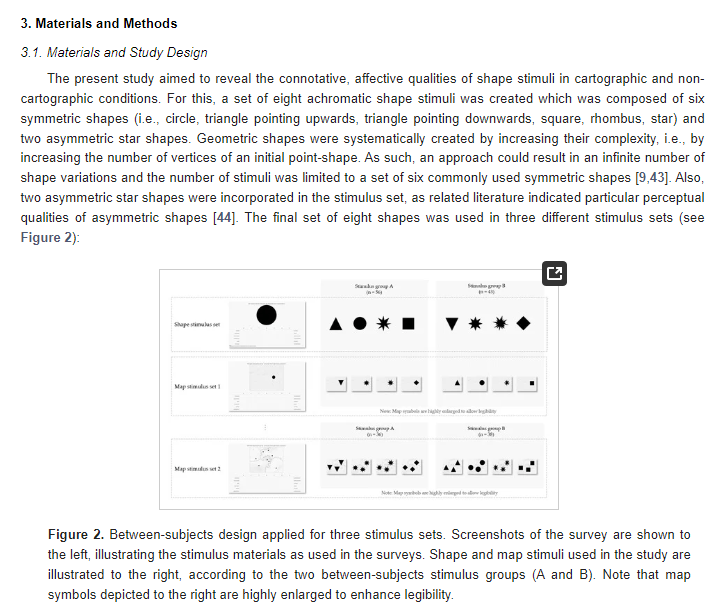
- Affective Communication of Map Symbols: A Semantic Differential Analysis
- This study asked respondants how they felt about different cartographic symbols. For the background knowledge of the study, I liked that they included the names and meanings behind the symbols. However, the text is long and isn’t broken up well so I found myself skimming a lot of the text.

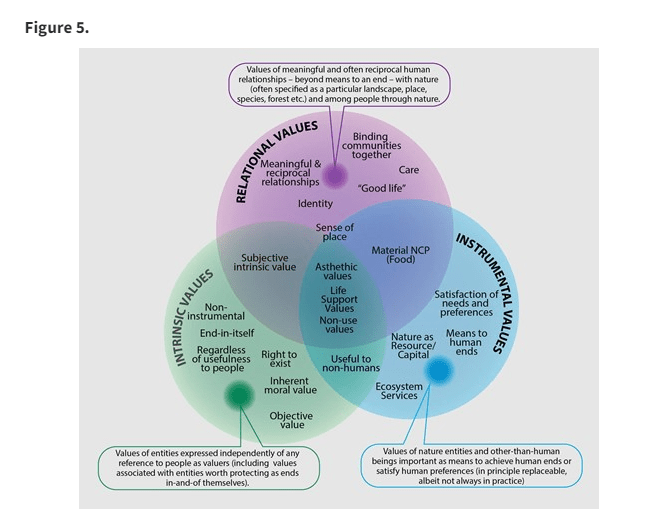
- Why nature matters: A systematic review of intrinsic, instrumental, and relational values
- I am really happy I found this study, it’s super interesting to me because of the nature aspect. They also did a great job explaining the process behind the research and added plenty of examples and graphics.
- In Table 1. they summarized the core meanings, salient articulations, and most relevent associations of each category (Intrinsic, Instrumental, Relational). By breaking each of these three down into categories, it was made easier for me to understand the concept behind each of these and how it correlates to the study.
- Each of the graphics I’ve shown below shows the study’s process for finding information and how they organized it. As you go further into the study, they became more and more visually stimulating.


 Isabella Susino
Leave a comment