Auteur theory is the assertion that a film bears the creative imprint of one individual, another name for this would be an auteur analysis. Alfred Hitchcock, a film director and producer from England and known as “the master of suspense;” he’s directed over 50 feature films spanning over 6 decades. Based on his work with Psycho (1960)and Vertigo (1958), Hitchcock’s persona can’t be seen clearly since it’s only two of his films. However, there are some of Hitchcock’s recognizable imprint still presented in both films.
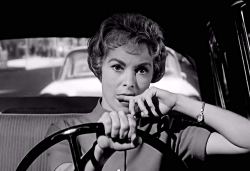
In Psycho, There are many themes that have to do with the character’s eyes: watching, seeing things they’re not supposed to and birds of prey. The camera first shows the audience an affair happening through a window in a hotel; as uncomfortable as it sounds, the story continued to tell the audience that 1) yes there was an affair happening and 2) the woman is the one that “wears the pants.”
The money that the main character stole was often the object that was more focused on, making it confusing for the audience when it really didn’t have anything at all to do withe the plot. It was a manipulation by Hitchcock to make the audience understand that it was all the main character could think about and was taking her attention away from everything else that was happening.
In Vertigo, the film starts off, in what it seems like, the middle of a scene. As if the characters had been saying something to each other just the moment before. There are a lot of medium camera shots (waist and above) in both films, especially when the characters are driving somewhere.
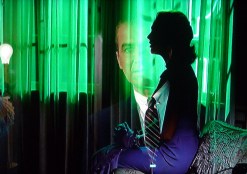
In both films, the women are often portrayed as objects of obsession, of passion and lust – it’s argued that this represents the way that Hitchcock often treated women off camera as well. The female characters were often dressed for their male counter parts, especially with the shower scene in Psycho and the part in Vertigo where the man chooses clothing he likes and makes her try on, instead of her choosing what she likes and what she wants to wear.
Hitchcock, based on these two films alone, also likes to show mental illness on screens – almost as if he wants the audience to try to understand them better. First in Psycho, he had used duality – two people in one physical form – some could even say it was a kind of multiple personality disorder. Second, in Vertigo, acrophobia is fear of heights. Hitchcock uses this kind of like with the money in Psycho, making the audience focus in on it more than what’s actually happening.
 Isabella Susino
Leave a comment